

I turn 35 on August 24. As I type these words, my brain cannot comprehend that I started this newsletter when I was 25. A decade has gone by.
I am in a totally different stage of life, but I love looking back to see what my problems and worries and anxieties were in my mid-20s. I wish I could slap myself upside the head and go, “Oh stop it.” I’m sure I’ll feel the same way when I turn 45, but alas.
As many of you know, I’ve been doing annual reflections for the last seven years (check out 34, 33, 32, 31, 30, 29, and 28).
If you’ve been a subscriber over the past decade, you’ve seen me get engaged, get married, quit my job at FORTUNE, go all in on The Profile, publish a book, have a daughter, a son, and twins. 😅 We’ve been through a lot together — and I don’t take any of it for granted.
So here are 13 things I learned at 35:
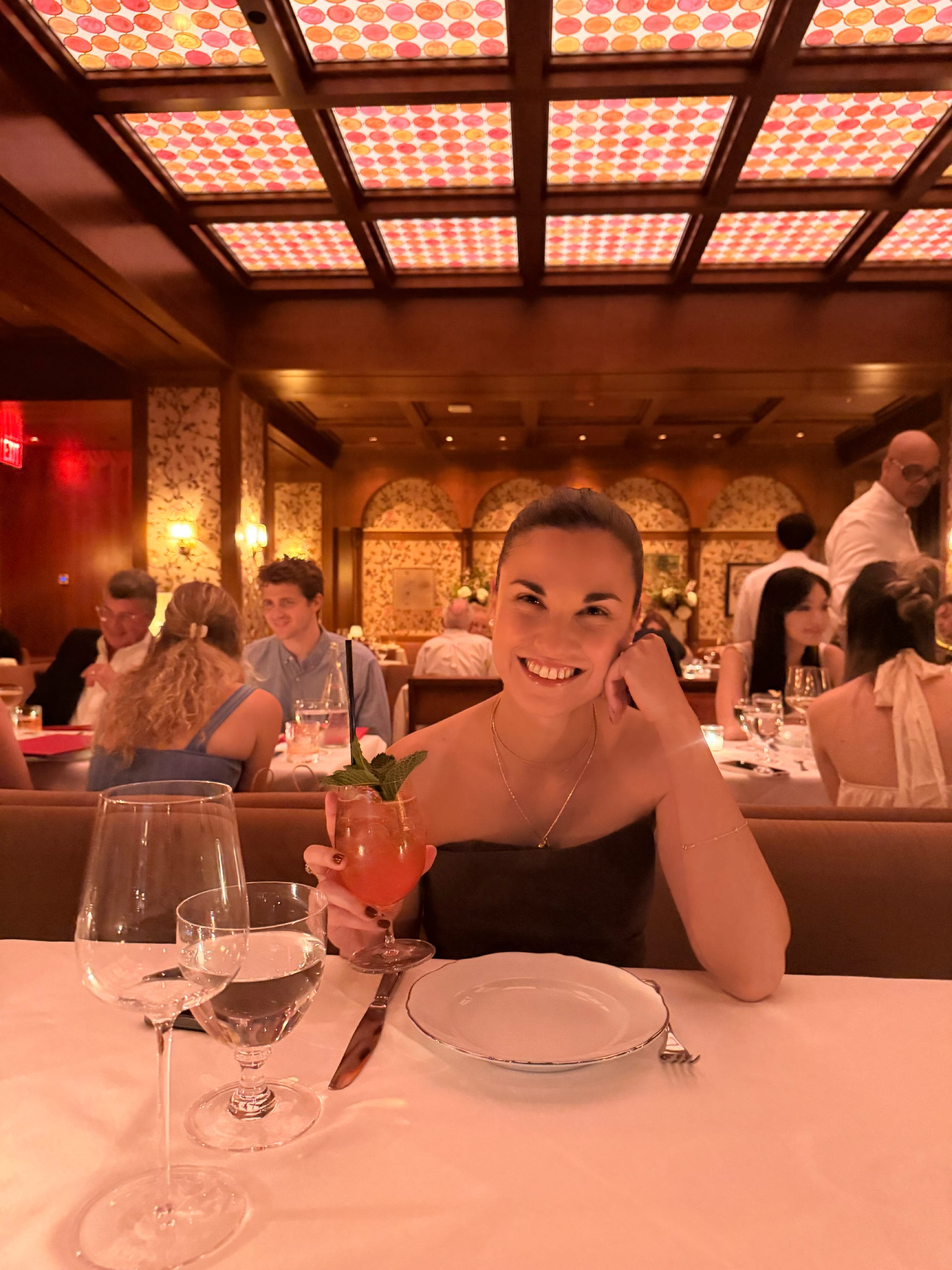
1. Faith is paramount.
This year, I’ve had a number of experiences that have pointed me toward faith. Between a pregnancy misdiagnosis, a week-long NICU stay with my newborn twins, and many, many more moments of uncertainty, it was easy to get really down and stay down.
I can’t tell you what kept me going other than just a wholehearted belief that it’s in God’s hands. As someone who obsesses over controlling the outcome, this year taught me how to trust and have faith in something bigger than myself.
2. Always, always, always pay it forward.
And faith is about more than just what happens to us. I was reminded of that when I met Alex Mebane in Central Park. He’s an artist who paints watercolor paintings of a chicken — a small, yellow, wide-eyed bird, each one paired with a line of scripture or a simple, handwritten quote.
When I asked Alex how much the paintings cost, he told me: “You pay me whatever you want. This is such a weird gift from God that he knows what I need.”
So I interviewed him for The Profile & shared his story. (You can check out his work here or find him in Central Park.)
My dad often tells me: “Sometimes God helps us, and other times, He uses us to help others.” I believe that the highest form of faith extends beyond yourself — helping others, even in the smallest ways.
There’s a Japanese notion called “the red thread of fate” that says we’re all connected by an invisible string to people whose lives we’re meant to touch. Whether or not you believe that literally, I love the idea that our lives are constantly intersecting in ways we’ll never entirely understand.
3. Calm is a better strategy than control.
It took four kids to make me loosen up a little. With my first, I was so nervous and put so much unnecessary pressure on myself to get everything right. With my second, I stepped on the gas and doubled down on the rpessure. And then with #3 and #4, I finally realized that things won’t be perfect no matter how hard I try, so my brain let go a little.
And now I’m actually — dare I say — chill?
It’s so much better living inside the chaos instead of constantly trying to control it. Four kids make control impossible. And so, once control is off the table, calm becomes a much more useful strategy.
(My dental hygienist once told me that her friend with four kids is so calm, “she has no pulse.” 🤣 That is the level of zen I aspire to.)
4. Beware of the dark side of success.
We spend so much time preparing ourselves for disappointment that we rarely consider the opposite skill: how to receive success, happiness, love, or abundance without immediately bracing for its disappearance.
That’s what I noticed while watching a Netflix documentary on Charlie Sheen. His early career was a golden streak — Platoon, Wall Street, Major League, even a blink-and-you-miss-it cameo in Ferris Bueller’s Day Off. By his late 20s, Sheen was one of Hollywood’s most bankable stars.
In one clip, a young Sheen reflects: “We’re not taught as children how to deal with success… Nobody ever said, ‘If at first you succeed, what do you do?’” And later: “Everyone teaches you how to rise after you fall. Nobody teaches you how to hold success once you have it.”
His former Two and a Half Men co-star Jon Cryer says, “I don’t know that [Charlie] believes that he deserves what he’s got. I think there’s a part of him that throws it all away just to see if he ever deserved it.”
It’s self-sabotage born from success.
Charlie Sheen’s story is an extreme example, but I think some version of this lives in all of us. When life becomes better than we imagined, we sometimes stop trusting that it will last & we start waiting for the other shoe to drop. We become so afraid of losing the thing we love that we don’t even enjoy having it.
I’m still learning how to hold on to success without finding ways to sabotage it.
5. Power is not abstract.
I reflected on this lesson when I was writing my profile on Kathryn Wylde. I spoke with her friend Lindsay Newland Bowker, who has known her since the 1970s.
One Christmas, the two friends were baking for Wylde’s annual holiday party, and the cookies were elaborate, carefully shaped, and intricately frosted. But one of them wasn’t quite perfect. Newland Bowker told her: “Nobody will notice once it’s on the tray.”
To which Wylde responded: “People only see the cookie they get.”
I haven’t stopped thinking about that line.
The cookie story is a reminder that power isn’t abstract. Every decision made at the top is felt by someone on the receiving end. You might be making one decision among hundreds that day, but to the person affected by it, that is the cookie they get.
6. Anxiety often spikes when you’re consuming low-value content.
Yesterday, I was scrolling on Instagram for five minutes, and I was confronted with posts about a woman setting someone on fire, a man taking his own life, and an actress who died of an overdose.
I didn’t seek these posts out. They were delivered to me, and I felt the weight of their existence as a pit in my stomach. Immediately.
I got off my phone, but the negativity lingered. And then I became acutely aware of how automatic it had become to reach for my phone and open Instagram. I noticed how much low-value information I’d been feeding my brain. I also noticed that my Kindle and Audible apps hadn’t been touched in a very long time.
It occurred to me that I was basically giving strangers on the internet permission to decide what my brain thought about all day.
So I downloaded two books on my Kindle. I’m trying to learn how to cook a few new things. I’m doing more jigsaw puzzles with my kids more. And I’m paying closer attention to what I let into my brain because I’ve realized your content diet really does shape your life.
7. We connect with flaws much more than successes.
As a perfectionist, this is hard to admit, but the truth is that people are often drawn to imperfect things.
For some reason, perfection isn’t all that memorable. We want to see the human behind the mask — warts and all.
I was reminded of this while watching clips from Alex Warren’s Grammy performance. Nominated for Best New Artist, Warren began singing his hit “Ordinary,” but you could see him tapping his earpiece before eventually pulling it out. An audio malfunction left him about half a beat behind for part of the song.
You could tell he was frustrated, but he kept going and finished the song. At the end, though, the disappointment was written all over his face.
Later, he posted on Instagram: “When you’re performing at the Grammys and all you hear is this in your ears,” alongside a clip of the audio chaos, clutching his head in mock frustration.
And here’s the thing: Bruno Mars, Post Malone, Justin Bieber, Lady Gaga, and plenty of other massive stars also performed that night. Their performances were excellent. And yet, I didn’t hear much about any of them afterward.
But funnily enough, Warren’s malfunction may have done more for him than a flawless performance would have. It gave us something to talk about & bond over.
As Malcolm Gladwell puts it: “You want an aftertaste, and that comes from not everything being perfectly blended together.”
8. You can build almost anything with intensity, consistency, and authenticity.
My friend Hilary Hoffman (The Weekly Assist) invited me to take a workout class at her SotoMethod studio.
As she guided us through the movements, she talked about the power of intensity, consistency, and authenticity. Those three things apply to building nearly anything in this life.
You need intensity to build a family, you need consistency to work on a business every single day, and you need authenticity to do things in a way that feels true to you.
9. We are not who we say we are. We are how we move through the world.
This is something I notice more and more when reporting profiles. Most people have a very clear story they tell about themselves: “I’m generous.” “I’m ambitious.” “I’m a good boss.” “I’m a good parent.”
But I’ve learned that people’s true selves emerge in the tiny moments they think are inconsequential. Like it or not, we can’t stay “on” all the time.
That’s why, when I’m reporting, I pay attention to what someone emphasizes, what they avoid, how they treat the person who can do nothing for them, and what slips out unintentionally. (Check out my piece: How I Capture the Hidden Side of Public People)
10. Uncertainty + Hope = Miracle.
My husband and I went to Game 4 of the New York Knicks Finals at Madison Square Garden.
The Spurs took a small lead, and then a bigger one. By halftime, they were up 27 points. The energy went from electric to non-existent when it became clear the night wasn’t going how we thought it would go.
And then — a miracle.
The Knicks took their first lead with just under a minute left in the game.
Thousands of fans experienced the same emotional sequence. Everyone went from “it’s over” to “wait…” to “maybe?” to “oh my God what did I just witness?”
Jalen Brunson missed the potential game-winning three-pointer. The Knicks won only because OG Anunoby tipped it in with 1.2 seconds remaining. One point two seconds!
I kept thinking about that game afterward because of how certain we had all been that it was over. By halftime, most of us were convinced we knew exactly how the Knicks’ story would end. Then, in the span of a few minutes, no one knew anything for certain anymore.
That’s what makes miracles feel like miracles. There’s despair, followed by a miniscule grain of hope, then uncertainty, and then victory.
As Yogi Berra put it, “It ain’t over till it’s over.”
11. The ability to speak freely is a massive freedom we take for granted.
I’ll never forget what Evan Mawarire, the pastor who stood up to a dictator in Zimbabwe, told me: “Freedom means you can talk to your friend, criticize the government, and then forget about it and go home. Where I’m from, if you criticize the government, you’re not going to make it home.”
The ability to speak freely, argue, criticize the people in power, make a joke, complain about the country, and then go about your day without worrying that your words will cost you your life is one of the greatest freedoms we take for granted.
12. Unwind as hard as you work.
The other day, my watch told me I walked 13,764 steps — the equivalent of 6.5 miles — and I hadn’t left the house. That’s wild. Welcome to being a mom.
But every evening, I make it a point to take a shower, lie down with a book, and let the day wash over me.
As Anne Lamott said, “Almost everything will work again if you unplug it for a few minutes... including you.”
13. The key to life’s happiness is small moments with those you love the most
Here’s what C.S. Lewis said about what matters most:
“To be happy at home is the end of all human endeavor. The sun looks down on nothing half so good as a household laughing together over a meal, or two friends talking over a pint of beer, or a person alone reading a book that interests them; and all economics, politics, laws, armies, and institutions, are only valuable in so far as they prolong and multiply such scenes.”
The older I get, the more I understand this.
The sound of your kids giggling with each other, or lying in bed next to the person you love, or seeing a dear friend for the first time in a while … all of those things may seem tiny in the grand scheme of things, but they’re THE JOY.
That’s it.
The small moments with those you love most are the key to all the happiness in the world.
… For more like this, make sure to sign up for The Profile here:
Want more? Check out these great reads:
— 100 Couples Share Their Secrets to a Successful Relationship
— How the Language You Speak Influences Your Mental Frameworks
— 20 Business Power Players Share Their All-Time Favorite Reads
— The Science Behind Why Social Isolation Can Make You Lonely
— Hamdi Ulukaya, the Shepherd-Turned-Billionaire CEO
— 3 Ways to Attract More Luck Into Your Life
— I quit my job at the start of the pandemic to launch a company. Here’s what I’ve learned in the first 90 days.
— How You Can Use “Hanlon’s Razor” to Avoid Petty Arguments
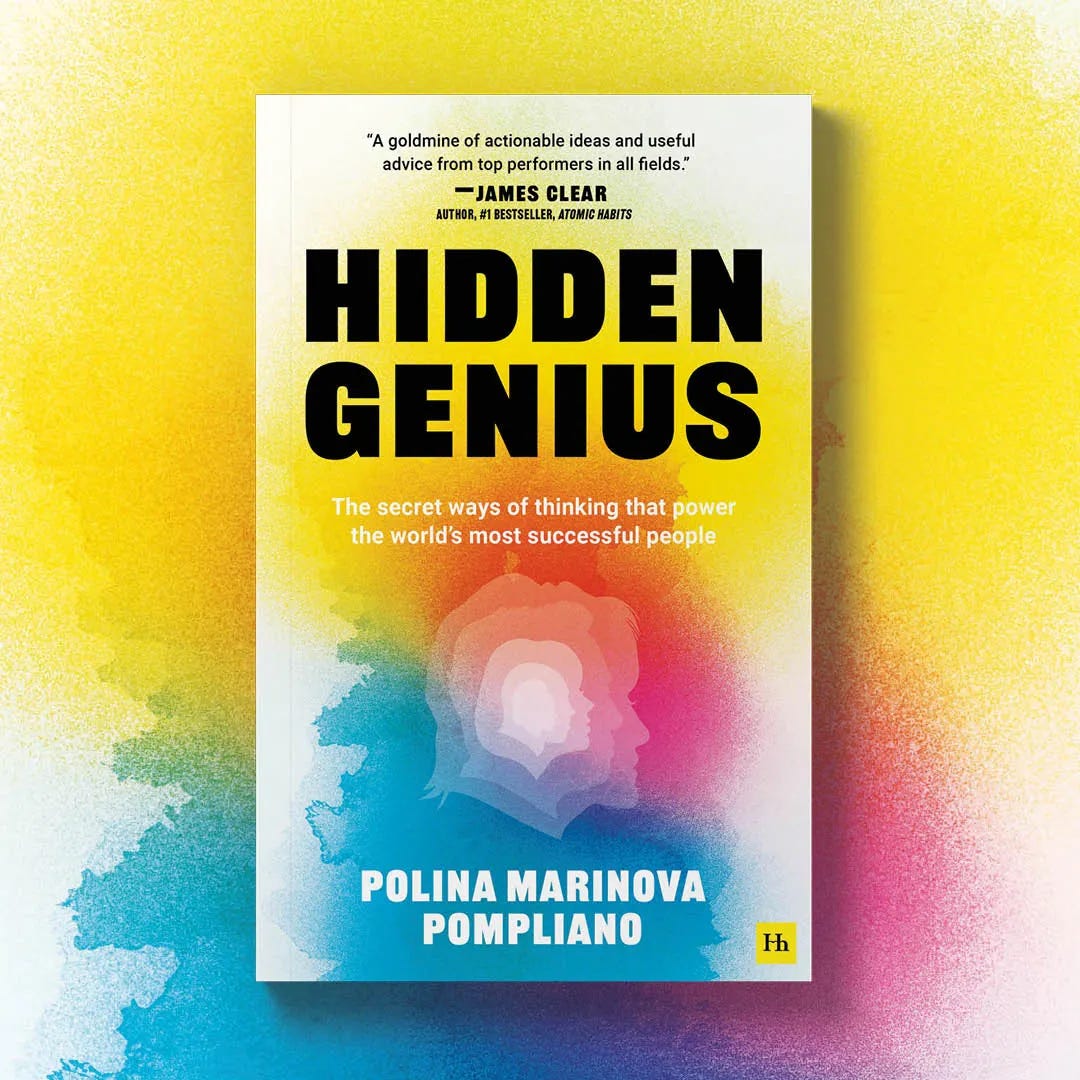
✨ Order the paperback edition of HIDDEN GENIUS below:
Love this, Polina! Happy birthday!🎈
Finished listening to the whole article. These are great lessons. Thanks for sharing! Love your writing, subscribed 🤩