
Last updated: November 6, 2026
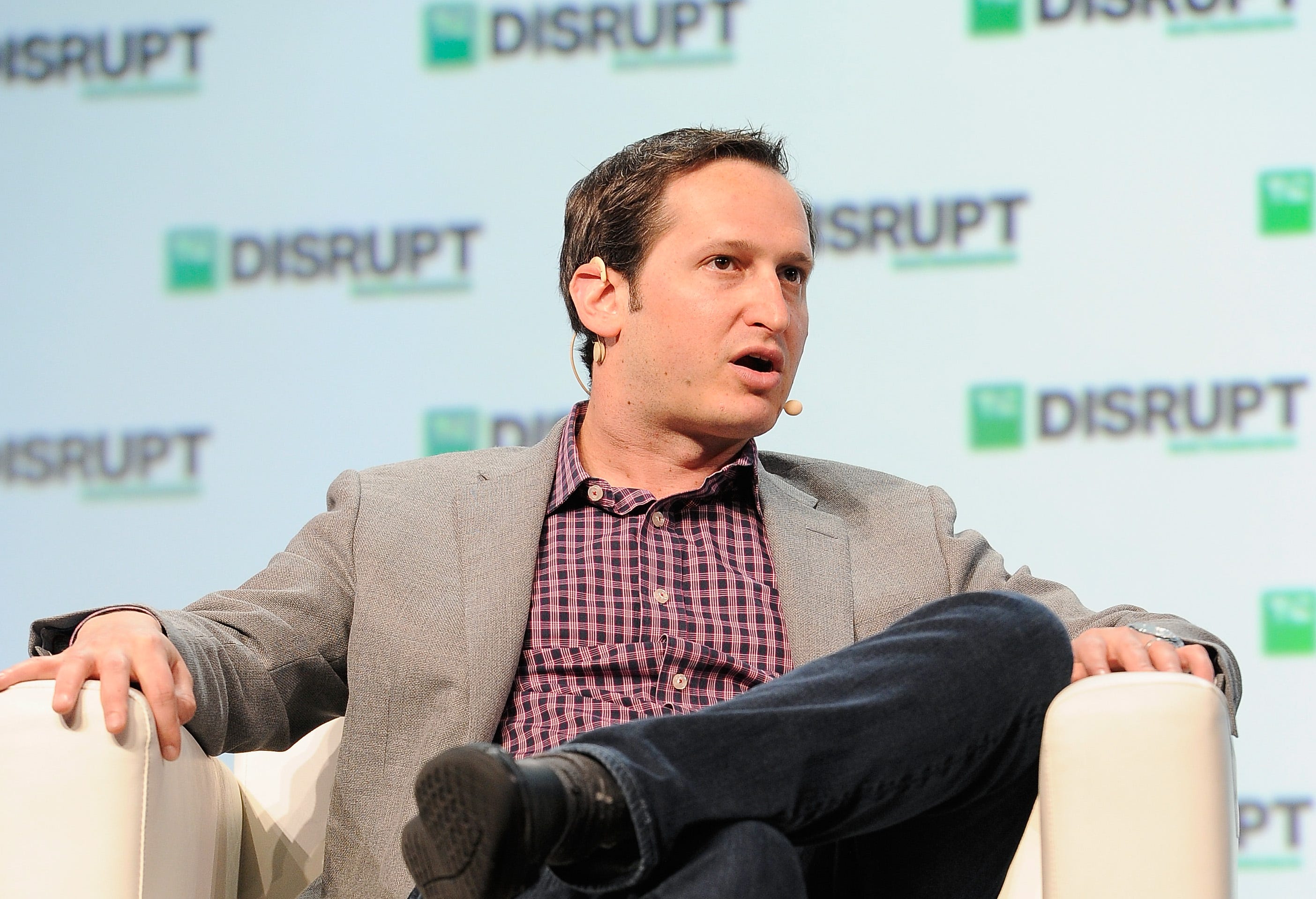
Photo: Steve Jennings / Getty Images for TechCrunch, CC BY 2.0, via Wikimedia Commons
Jason Robins is the co-founder, CEO and chairman of DraftKings, whose stock closed down about 21% at $18.51 on Friday, Nov. 6, 2026, after he said the company will spend $650 million to $700 million on prediction markets this year. Shares fell as much as 29% during the day, Bloomberg reported. With its third-quarter results on Thursday, DraftKings cut its 2026 adjusted EBITDA forecast to $175 million to $275 million, from $700 million to $900 million, and lowered its revenue forecast to $6.35 billion to $6.55 billion. Robins says the spending is mostly marketing to win customers for DraftKings Predictions, which launched in December 2025, and that it will pay off. “I don’t think we’re giving up an inch anywhere,” he told analysts.
Get profiles like this in your inbox — Subscribe to The Profile (free)
Quick facts
Name: Jason D. Robins
Job: Co-founder, CEO and chairman of DraftKings (Boston)
Co-founders: Matt Kalish and Paul Liberman
Hometown: Miami; graduated from Killian High School (1999)
Education: B.S. in economics and computer science, Duke University (2003)
Earlier career: Marketing and analysis at Capital One (2003–2008); marketing and analytics at Vistaprint (2008–2012)
Parents: Father an economics professor at the University of Miami; mother a schoolteacher
Family: Married to Shannon Robins; father of four, with a fifth child on the way as of 2024
DraftKings today: Online sportsbooks in 28 states; Q3 2026 revenue of $1.329 billion, up 16%
Known for: Turning daily fantasy sports into one of the two biggest U.S. sports-betting companies
Who is Jason Robins?
Robins grew up in Miami, a self-described stat nerd who read box scores at breakfast and went to every University of Miami home football game with his father, an economics professor there, Sports Business Journal reported. He once thought about dropping out of Duke to chase Silicon Valley, but finished a degree in economics and computer science in 2003.
He spent five years at Capital One and four at Vistaprint, the online printer outside Boston. There, he, Matt Kalish and Paul Liberman, all in strategy and analytics, kept talking about how they had missed the last startup boom. In early 2011 Kalish pitched a site that squeezed a season-long fantasy league into a single day. Robins was hooked. When they found others already doing it, Kalish was crushed; Robins took it as proof the idea was real.
They built a prototype in a spare bedroom of Liberman’s townhouse and pooled $25,000. Robins estimates 30 or 40 venture firms turned them down before Ryan Moore of Atlas Advisors agreed to put in about $1 million. “That’s the first resilience lesson of Jason Robins,” Moore told SBJ. DraftKings launched with a one-on-one baseball contest timed to opening day in 2012.
Spending to win
Robins’ playbook was set early: raise money, then spend it fast. After the first round, he told his co-founders they had to spend all of it in five months on bigger prizes. “They said I was insane,” he recalled. It worked — growth brought a $24 million round, then $41 million in 2014.
In 2015 he pitched ESPN alone, in a sweater and slacks, against FanDuel’s four-person team in suits. “We bet on his drive and his brains,” said former ESPN president John Skipper. That summer Fox Sports led a $300 million round at a $1.8 billion valuation, and DraftKings and FanDuel flooded NFL broadcasts with ads.
Then came the crash. In October 2015, reports that employees at the two companies were using inside information set off investigations. New York’s attorney general ordered both to stop taking entries, calling daily fantasy illegal gambling. Robins, whose wife was pregnant with their third child, was living with his mother-in-law while their house was built. He raised money at a $500 million valuation, a fraction of the last round. “I’ll take whatever valuation I can get now just so we can get money into the company,” he said.
DraftKings survived. A planned merger with FanDuel was dropped in 2017 after the Federal Trade Commission sued to block it. In May 2018 the Supreme Court struck down the federal ban on sports betting, and that August DraftKings opened the first online and mobile sportsbook in New Jersey. It went public in April 2020 through a $3.3 billion three-way merger with SBTech and a SPAC, six weeks after Covid shut down sports.
Career timeline
1999: Graduates from Killian High School in Miami.
2003: Graduates from Duke; joins Capital One.
2008: Joins Vistaprint.
2011–2012: Co-founds DraftKings with Kalish and Liberman; launches for MLB opening day 2012.
2013: Becomes Major League Baseball’s first daily fantasy partner.
July 2015: $300 million round led by Fox Sports at a $1.8 billion valuation.
Late 2015: Insider-information scandal; New York orders DraftKings to stop.
2017: FanDuel merger dropped after FTC challenge.
August 2018: Launches the first online sportsbook in New Jersey.
April 2020: DraftKings starts trading on the Nasdaq as DKNG.
March 19, 2021: Stock closes at a record $71.98.
May 2022: Buys Golden Nugget Online Gaming; stock hits a record-low close of $10.27.
2024: Buys lottery app Jackpocket for $750 million.
October 2025: Buys prediction platform Railbird.
December 2025: Launches DraftKings Predictions.
Nov. 5–6, 2026: Cuts 2026 profit guidance on prediction spending; stock falls about 21%.
Want more stories like this? The Profile goes inside the decisions that shape careers like his. Subscribe free.
What he’s known for
Founder-CEO staying power: Sports Business Journal called him the only founder among the CEOs of the seven leading U.S. sportsbooks in 2024.
Calm under fire: “I’ve never heard him be pessimistic,” Skipper said. “I’ve heard him be realistic.”
Turning adversity into routine: “Every time something comes up, I can say, ‘This isn’t the hardest thing we’ve had to go through,’” Robins told SBJ.
In the news
Nov. 5, 2026 (Q3 results): Revenue rose 16% to $1.329 billion, short of analysts’ roughly $1.39–1.40 billion. The net loss widened to $468.7 million, and the adjusted EBITDA loss grew to $316.9 million. DraftKings expects its core business to earn $875 million to $925 million in adjusted EBITDA this year, and to spend $175 million to $225 million of the Predictions money in the fourth quarter.
2026 guidance cut: Adjusted EBITDA to $175 million–$275 million (from $700 million–$900 million); revenue to $6.35 billion–$6.55 billion (from $6.5 billion–$6.9 billion).
2027 outlook: Revenue of $7.35 billion to $7.75 billion and adjusted EBITDA of $800 million to $1 billion, including $650 million to $750 million of Predictions revenue and a smaller $250 million to $350 million Predictions investment.
Nov. 6, 2026: Shares closed down 21.3% at $18.51 and were down about 50% for the year, Seeking Alpha reported. Part of investors’ doubt: a possible Supreme Court ruling on sports prediction markets. “Why not just wait?” asked Morningstar analyst Dan Wasiolek. Robins said DraftKings will earn back the money even if the court rules against it, in part by selling other products to prediction-market customers. He said DraftKings is now No. 3 in prediction markets and still tied with FanDuel for No. 1 in sports betting.
Controversies / criticism
The 2015 scandal: Insider-information allegations led to state investigations. In 2017 DraftKings and FanDuel each paid $1.3 million to settle with the Massachusetts attorney general over practices before 2016.
Robins’ social posts: In September 2024 the SEC fined DraftKings $200,000 after its PR team posted nonpublic revenue information on Robins’ personal LinkedIn and X accounts before the earnings release.
Problem gambling: DraftKings faces lawsuits accusing it of exploiting problem gamblers, including one filed by the city of Baltimore in 2025. A 2026 ProPublica investigation said the company rewarded a reporter who mimicked a problem gambler with VIP treatment.
FAQ
Who is Jason Robins?
He co-founded DraftKings in 2012 with Matt Kalish and Paul Liberman and is its CEO and chairman.
Why did DraftKings stock fall?
On Nov. 5, 2026, DraftKings cut its 2026 adjusted EBITDA forecast to $175 million–$275 million from $700 million–$900 million, mainly because it plans to spend $650 million to $700 million on prediction markets. The stock closed down about 21% the next day.
What is DraftKings Predictions?
A prediction-markets app launched in December 2025 that lets users trade contracts tied to sports and real-world events.
Where did Jason Robins go to college?
Duke University, graduating in 2003 with a degree in economics and computer science.
Who founded DraftKings?
Jason Robins, Matt Kalish and Paul Liberman, three former Vistaprint employees, in Boston.
Further reading
DraftKings’ expensive bet on prediction markets is crushing its stock — MarketWatch
DraftKings stock tumbles after disclosing big spending on prediction markets — Boston Globe
Jason Robins leads DraftKings through chaotic storms — Sports Business Journal
DraftKings Q3 2026 earnings call transcript — The Motley Fool
The Profile sends deeply reported profiles of influential people every week. Subscribe free →