
Last updated: November 6, 2026
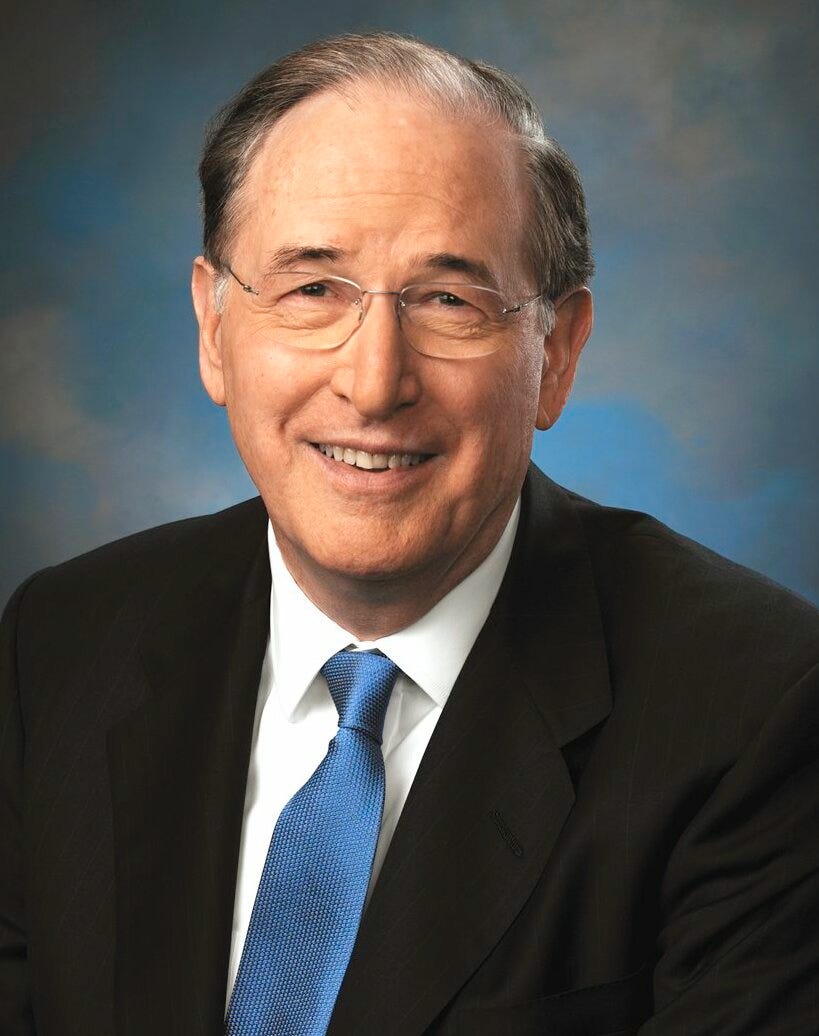
John D. “Jay” Rockefeller IV, the former West Virginia governor and five-term U.S. senator, died Thursday night at his home in Washington. He was 89. Mary Stewart, vice president for external affairs at WETA — the public broadcasting station where his wife, Sharon Rockefeller, serves as president and CEO — confirmed the death to the Associated Press. His family did not immediately provide a cause. A great-grandson of oil tycoon John D. Rockefeller, he left one of America’s richest families for half a century of public service in one of its poorest states, arriving in West Virginia in 1964 as an anti-poverty volunteer in the Kanawha County community of Emmons.
Get profiles like this in your inbox — Subscribe to The Profile (free)
Quick facts
Name: John Davison “Jay” Rockefeller IV
Born: June 18, 1937, New York City
Died: Thursday night, Nov. 5, 2026, Washington, D.C. (age 89)
Offices: Governor of West Virginia (1977–1985); U.S. senator from West Virginia (1985–2015)
Earlier offices: West Virginia House of Delegates (1966–1968); West Virginia secretary of state (1969–1973); president of West Virginia Wesleyan College (1973–1976)
Party: Democrat (the only Democrat in his family’s political dynasty)
Education: Phillips Exeter Academy; B.A. in Far Eastern languages and history, Harvard University (1961); studied Japanese at International Christian University in Tokyo
Family: Married Sharon Percy Rockefeller (1967); four children, including Valerie and Justin
Known for: Helping create the Children’s Health Insurance Program (CHIP); chairing Senate Intelligence, Commerce and Veterans’ Affairs
Parents: John D. Rockefeller III and Blanchette Ferry Hooker
Who was Jay Rockefeller?
Rockefeller was born in New York City on June 18, 1937, weeks after the death of his great-grandfather, John D. Rockefeller, once America’s richest man. His father was a major philanthropist; his uncle Nelson Rockefeller served as New York governor and U.S. vice president; another uncle, Winthrop, was governor of Arkansas; uncle David ran Chase Manhattan Bank.
He graduated from Phillips Exeter Academy and from Harvard in 1961 with a degree in Far Eastern languages and history, after spending three years studying Japanese in Tokyo. He worked for the Peace Corps in Washington under President John F. Kennedy, including as operations director for the program in the Philippines, and briefly at the State Department’s Bureau of East Asian and Pacific Affairs.
In 1964 he moved to Emmons, West Virginia, as a Volunteers in Service to America (VISTA) anti-poverty worker. The posting redirected his life. He won a seat in the West Virginia House of Delegates in 1966, became secretary of state in 1968, lost a 1972 race for governor to Republican Arch Moore, then served as president of West Virginia Wesleyan College before defeating Moore’s successor race in 1976. He was re-elected governor in 1980 and governed through plant and mine closures, floods, a long coal strike and unemployment that, between 1982 and 1984, hovered between 15% and 20%.
In 1984, still governor, he won a U.S. Senate seat, narrowly beating businessman John Raese while spending millions of his own money. He was re-elected in 1990, 1996, 2002 and 2008. Over 30 years he became a leading Senate voice on health care, children’s coverage, coal-miner benefits, veterans and economic development — including helping bring Toyota manufacturing to Putnam County and supporting the employee buyout of Weirton Steel. He chaired the Senate Intelligence Committee, the Commerce, Science and Transportation Committee, and Veterans’ Affairs. When Robert Byrd died in 2010, Rockefeller became West Virginia’s senior senator. He announced in January 2013 that he would not seek a sixth term and left office in January 2015. Republican Rep. Shelley Moore Capito succeeded him.
Career timeline
June 18, 1937: Born in New York City.
1961: Graduates from Harvard (B.A., Far Eastern languages and history).
1964–1966: VISTA anti-poverty volunteer in Emmons, West Virginia.
1966–1968: West Virginia House of Delegates.
1969–1973: West Virginia secretary of state.
1972: Loses the governor’s race to Arch Moore.
1973–1976: President of West Virginia Wesleyan College.
January 17, 1977 – January 14, 1985: Governor of West Virginia (elected 1976, re-elected 1980).
January 15, 1985 – January 3, 2015: U.S. senator from West Virginia.
1997: Helps create the Children’s Health Insurance Program (CHIP).
2002: Votes to authorize the Iraq War; later says he would have voted no.
2007–2009: Chairs the Senate Intelligence Committee.
2009–2015: Chairs Senate Commerce, Science and Transportation.
2010: Becomes West Virginia’s senior senator after Robert Byrd’s death; votes for the Affordable Care Act.
January 11, 2013: Announces he will not run again.
January 3, 2015: Leaves the Senate.
Nov. 5, 2026: Dies at his Washington home at 89.
Notable work
CHIP: Rockefeller helped author the Children’s Health Insurance Program in 1997, extending coverage to millions of children in low-income families — the largest federal investment in children’s health since Medicaid, advocates said.
Health reform: He backed the Clintons’ failed 1990s plan and later Obama’s Affordable Care Act, pushing for a public insurance option that did not make it into the final law.
Veterans: Multiple terms chairing Veterans’ Affairs; pushed expanded care for service-related illnesses including Gulf War illness and Agent Orange exposure.
West Virginia industry: Supported Toyota’s Putnam County plant and the Weirton Steel employee buyout; usually backed coal and steel but angered some coal executives in 2012 by opposing efforts to block regulation of power-plant emissions.
Intelligence: As Intelligence Committee chair he oversaw a 2008 report concluding that Bush administration officials had exaggerated prewar Iraq intelligence and led the country to war on “false premises.”
Want more stories like this? The Profile goes inside the decisions that shape careers like his. Subscribe free.
What he was known for
The dynasty Democrat: He was the only Democrat among the Rockefellers who held major elective office, in a family that was otherwise Republican.
Poverty to the Capitol: The Emmons VISTA years framed a career sold as service to working families, miners, veterans and children in a poor state.
Soft-spoken liberal: Contemporaries described a tall, quiet Democrat with liberal views who could still spend heavily from personal wealth to win tough races.
In the news
Nov. 6, 2026: AP reported that Rockefeller died Thursday night at his Washington home at 89, confirmed by WETA’s Mary Stewart. West Virginia Gov. Patrick Morrisey ordered U.S. and state flags at the Capitol and state facilities to half-staff through sunrise on Nov. 13 and called Rockefeller’s career nearly five decades of service.
Reuters / Washington Post: Separate accounts said he died Friday at his Washington home; his family did not provide a cause.
Remembrances: Coverage highlighted CHIP, his Iraq War about-face, and the path from Standard Oil heir to Appalachian politician.
Quotes
“Championing those most in need has been my life’s calling and I will never stop fighting to make a difference for the people who mean so much to me.” — announcing he would not seek a sixth Senate term, 2013
“If I had known then what I know now, I would have voted against it.” — on the 2002 Iraq War authorization, Charleston Gazette, 2004
“Representing to the American people that the two had an operational partnership and posed a single, indistinguishable threat was fundamentally misleading and led the nation to war on false premises.” — on Bush administration claims linking Iraq and Al Qaeda, 2008 Intelligence Committee report release
Controversies / criticism
Iraq War vote: He voted in 2002 to authorize force, then became one of Bush’s sharpest Democratic critics after no stockpiles of weapons of mass destruction were found.
Telecom immunity: In 2007 he steered Intelligence Committee work toward retroactive legal protection for phone companies that assisted NSA surveillance — a shift from a 2003 letter to Vice President Cheney raising legality concerns. Wired noted a jump in AT&T-linked donations around that lobbying push.
Coal politics: His 2012 fight against blocking emissions rules drew anger from West Virginia coal executives who said he was out of touch.
Net worth & money
Rockefeller was long among the wealthiest members of Congress, an heir to the Standard Oil fortune. He spent millions of his own money on campaigns, including the 1984 Senate race. No reliable public figure for his estate at death was in the sources reviewed for this page.
FAQ
Who was Jay Rockefeller?
He was West Virginia’s governor from 1977 to 1985 and a Democratic U.S. senator from 1985 to 2015. He died in November 2026 at 89.
When did Jay Rockefeller die?
He died Thursday night, Nov. 5, 2026, at his home in Washington, the Associated Press reported, citing WETA’s Mary Stewart. Some other outlets dated the death to Friday, Nov. 6.
How old was Jay Rockefeller?
He was 89.
What was Jay Rockefeller known for?
CHIP and children’s health coverage, veterans’ issues, West Virginia economic development, and later criticism of the Bush administration’s case for the Iraq War.
Was he related to John D. Rockefeller?
Yes. He was the great-grandson of Standard Oil founder John D. Rockefeller, son of John D. Rockefeller III, and nephew of Nelson and David Rockefeller.
Who is Sharon Rockefeller?
His wife since 1967. Sharon Percy Rockefeller is president and CEO of WETA, the Washington public television station. They have four children.
Further reading
Jay Rockefeller, former West Virginia governor and US senator who was part of a dynasty, dies at 89 — AP
Jay Rockefeller, heir to famed dynasty and healthcare advocate in Senate, dies at 89 — Reuters via NBC
Governor Morrisey Orders Flags Lowered… — West Virginia governor’s office
Biographical Directory of the U.S. Congress: Rockefeller, John Davison (Jay), IV — Congress
The Profile sends deeply reported profiles of influential people every week. Subscribe free →