

Last updated: October 30, 2026
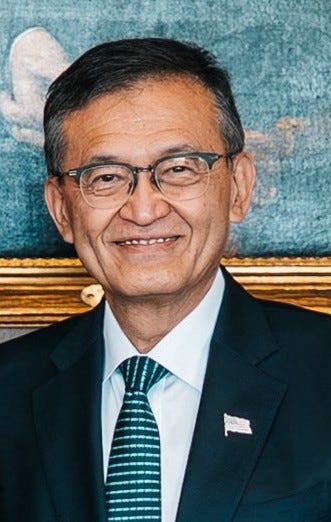
Lip-Bu Tan is the CEO of Intel, a Malaysian-born venture capitalist and chip industry veteran who took over the struggling chipmaker in March 2025. On Oct. 30, 2026, Intel’s stock fell 28.6% to close at $65.76, its worst day since 1974, after the company forecast fourth-quarter sales well below Wall Street’s estimates. The drop erased about $140 billion of market value, Yahoo Finance reported. Before the fall, the stock had nearly quadrupled under Tan. “Rebuilding Intel is going to be a multiyear journey,” he told analysts, “and I remain firmly committed to making it happen.”
Get profiles like this in your inbox — Subscribe to The Profile (free)
Quick facts
Born: Nov. 12, 1959, in Muar, Malaysia
Age: 66
Company: CEO of Intel (since March 18, 2025). Founder and chairman of Walden International.
Education: B.S. in physics, Nanyang University in Singapore. M.S. in nuclear engineering, MIT. MBA, University of San Francisco.
Family: Married to Ysa Loo. Two adult children. Lives in Piedmont, California.
Net worth: At least $1.1 billion, according to the Bloomberg Billionaires Index (first calculated Aug. 15, 2025)
Awards: Semiconductor Industry Association’s Robert N. Noyce Award (2022)
Known for: Turning around Cadence Design Systems, being an early chip investor in Asia, and now leading Intel’s comeback attempt
Who is Lip-Bu Tan?
Lip-Bu Tan grew up in Malaysia as the youngest of five children. His father was chief editor of the Chinese-language newspaper Nanyang Siang Pau. He studied physics in Singapore, then went to MIT for a master’s in nuclear engineering. He later earned an MBA in San Francisco.
In 1987 he founded Walden International, a venture firm named after Henry David Thoreau’s Walden. “Contrarian, rather than just following the trend,” is how he described its approach. He bet early on chip and tech startups across Asia, and in 2001 Forbes called him “the pioneer of Asian VC.”
In 2009 he became CEO of Cadence Design Systems, which makes the software engineers use to design chips. Cadence was in trouble at the time. Over the next 12 years, revenue more than doubled and the stock gained about 4,000%, according to Wikipedia’s summary of Cadence’s results. That record made him one of the most respected people in the chip business.
He joined Intel’s board in 2022, quit in 2024 after disagreeing with the board and then-CEO Pat Gelsinger over strategy, and came back as CEO in March 2025. Since then he has cut staff, cancelled factory projects in Europe, brought in the U.S. government and Nvidia as major shareholders, and bet Intel’s future on its newest manufacturing process.
Career timeline
1959: Born in Muar, Malaysia.
1978: Graduates from Nanyang University in Singapore with a physics degree.
1980: Earns a master’s in nuclear engineering from MIT.
1983: Earns an MBA from the University of San Francisco.
1987: Founds Walden International, a venture capital firm.
2004: Joins the board of Cadence Design Systems.
2008–2009: Becomes interim co-CEO of Cadence in October 2008, then CEO in January 2009.
2021: Steps down as Cadence CEO and becomes executive chairman, a role he holds until 2023.
2022: Joins Intel’s board and wins the Robert N. Noyce Award.
2024: Resigns from Intel’s board.
March 18, 2025: Becomes Intel CEO.
July 2025: Intel says it will cut its core workforce to about 75,000 and cancel planned factories in Germany and Poland.
August 2025: President Trump calls on Tan to resign over his China ties, then meets with him. Weeks later the U.S. government takes a roughly 10% stake in Intel.
September 2025: Nvidia agrees to invest $5 billion in Intel.
Oct. 30, 2026: Intel’s stock falls 28.6% after a weak forecast, its worst day since 1974.
Notable deals & projects
Fixing Cadence: Tan took over a chip-design software company in crisis in 2009 and turned it into one of the industry’s most valuable companies.
Walden International: Through Walden, his firm, he became one of the earliest venture investors in chips and tech across Asia.
The U.S. government’s stake (2025): The government bought about 9.9% of Intel for $8.9 billion, paid for with $5.7 billion in CHIPS Act grants and $3.2 billion from the Secure Enclave program. It paid $20.47 a share, according to Yahoo Finance.
Nvidia’s $5 billion investment (2025): Intel’s biggest rival in AI became a shareholder and partner.
A $23 billion stock sale (2026): Intel raised $23 billion in a public stock offering, according to its third-quarter report.
The 18A bet: Intel’s newest manufacturing process, 18A, is in high-volume production in Arizona. Intel is still looking for outside companies to build chips in its factories. Tan said on Oct. 29, 2026: “We’re going to have a couple of customers ready to announce the next two quarters.”
Want the full story? Read The Profile’s take on the chip industry’s most important CEO in Who Is Jensen Huang? — then subscribe free.
What he’s known for
Turnarounds: He fixed Cadence, and investors expected him to do the same at Intel. The stock nearly quadrupled to a record on June 22, 2026, according to Yahoo Finance.
Being a contrarian investor: He built Walden on bets other investors weren’t making.
Moving fast on costs: He cut management layers in half, shrank Intel’s workforce and stopped building factories that didn’t have customers lined up.
Relationships: He has worked with Washington, Nvidia and the chip industry’s biggest players to keep Intel funded.
In the news
Oct. 29, 2026: Intel reported third-quarter revenue of $16.5 billion, up 21%, and adjusted earnings of 52 cents a share, beating the 40 cents analysts expected. Data center and AI revenue rose 78% to $7.3 billion. PC chip revenue fell 5% to $8.1 billion.
Oct. 29, 2026: Intel forecast fourth-quarter revenue of $15 billion to $16 billion and adjusted earnings of 25 cents a share. Analysts surveyed by LSEG had expected $17.1 billion and 43 cents. Intel expects PC sales to fall 12% in 2026 and 10% in 2027.
Oct. 29, 2026: An explosion at Intel’s factory in Israel, which killed two workers, will cost about $300 million in fourth-quarter revenue, CNBC reported. Tan called it an “unfortunate and tragic accident.”
Oct. 30, 2026: Intel shares closed down 28.6% at $65.76, the worst day since July 5, 1974, according to Yahoo Finance and Norgate Data. About $140 billion in market value was erased. The stock is still up nearly 80% this year but has lost more than half its value since its June peak.
Oct. 30, 2026: The fall cut more than $10 billion from the value of the government’s stake, Yahoo Finance reported. CNBC put the loss at about $12 billion. Nvidia’s stake lost about $6 billion.
Quotes
“Rebuilding Intel is going to be a multiyear journey, and I remain firmly committed to making it happen.” — Intel earnings call, Oct. 29, 2026
“Despite near-term headwinds across the PC industry, demand for our CPUs remains robust, reinforcing our confidence in the long-term growth opportunities for our business.” — Intel’s third-quarter 2026 earnings release
“We’re going to have a couple of customers ready to announce the next two quarters.” — On Intel’s factory business, Oct. 29, 2026
“Contrarian, rather than just following the trend.” — On why he named his venture firm after Thoreau’s Walden
Controversies / criticism
The forecast: Bernstein analyst Stacy Rasgon called Intel’s outlook “(in a word) terrible” and cut his price target to $75 from $110. Seaport’s Jay Goldberg told Reuters the sell-off reflected “a loss of faith in management’s credibility,” pointing to Intel making too many PC chips and too few AI server chips.
China ties: In April 2025, Reuters reported that Tan’s investment firms held stakes in more than 600 Chinese companies. In August 2025, President Trump posted that Tan was “highly CONFLICTED and must resign, immediately.” Trump changed his mind after they met, and the government’s stake in Intel followed.
Cadence’s export case: In July 2025, Cadence agreed to plead guilty and pay more than $140 million for selling chip-design tools to a Chinese military university from 2015 to 2021, much of it while Tan was CEO. Tan was not accused of personal wrongdoing.
Conflicts of interest: Questions about whether Intel might do deals with startups Tan has invested in, such as SambaNova and Rivos, led Intel to adopt rules requiring him to step out of those decisions, Reuters reported.
Net worth & money
The Bloomberg Billionaires Index estimated Tan’s net worth at at least $1.1 billion when it first calculated it on Aug. 15, 2025. Most of it came from his Cadence shares. Bloomberg left out his stake in Walden International because it isn’t publicly disclosed. Forbes has not published a net worth figure for him. The estimate came before Intel’s stock nearly quadrupled and then crashed, so it is likely out of date.
FAQ
Who is Lip-Bu Tan?
Lip-Bu Tan is the CEO of Intel. He is a Malaysian-born venture capitalist who founded Walden International and ran Cadence Design Systems from 2009 to 2021.
Why did Intel stock fall on Oct. 30, 2026?
Intel forecast fourth-quarter revenue of $15 billion to $16 billion, below the $17.1 billion analysts expected, because of weak PC demand and lost sales after an explosion at its Israel factory. Shares closed down 28.6%.
How old is Lip-Bu Tan?
He is 66. He was born Nov. 12, 1959.
How much is Lip-Bu Tan worth?
Bloomberg estimated at least $1.1 billion in August 2025.
Does the U.S. government own part of Intel?
Yes. In August 2025, the U.S. government took a roughly 9.9% stake in Intel, mostly paid for with CHIPS Act grants it had already promised.
When did Lip-Bu Tan become CEO of Intel?
March 18, 2025, after Pat Gelsinger stepped down in December 2024.
Further reading
Intel stock plunges nearly 29%, its worst day since 1974 — Yahoo Finance
Amazon, Intel shares fall after earnings amid AI spending concerns — CNBC
Intel on course for worst day ever, triggers global chip rout — Reuters (via StreetInsider)
Intel CEO Lip-Bu Tan’s ‘Amazing’ Story Helped Make Him a Billionaire — Bloomberg
Trump demands ‘highly conflicted’ Intel CEO resign over China ties — Reuters
Cadence Design Systems Agrees to Plead Guilty and Pay Over $140 Million — U.S. Department of Justice
Who Is Jensen Huang? — The Profile
The Profile sends deeply reported profiles of influential people every week. Subscribe free →