
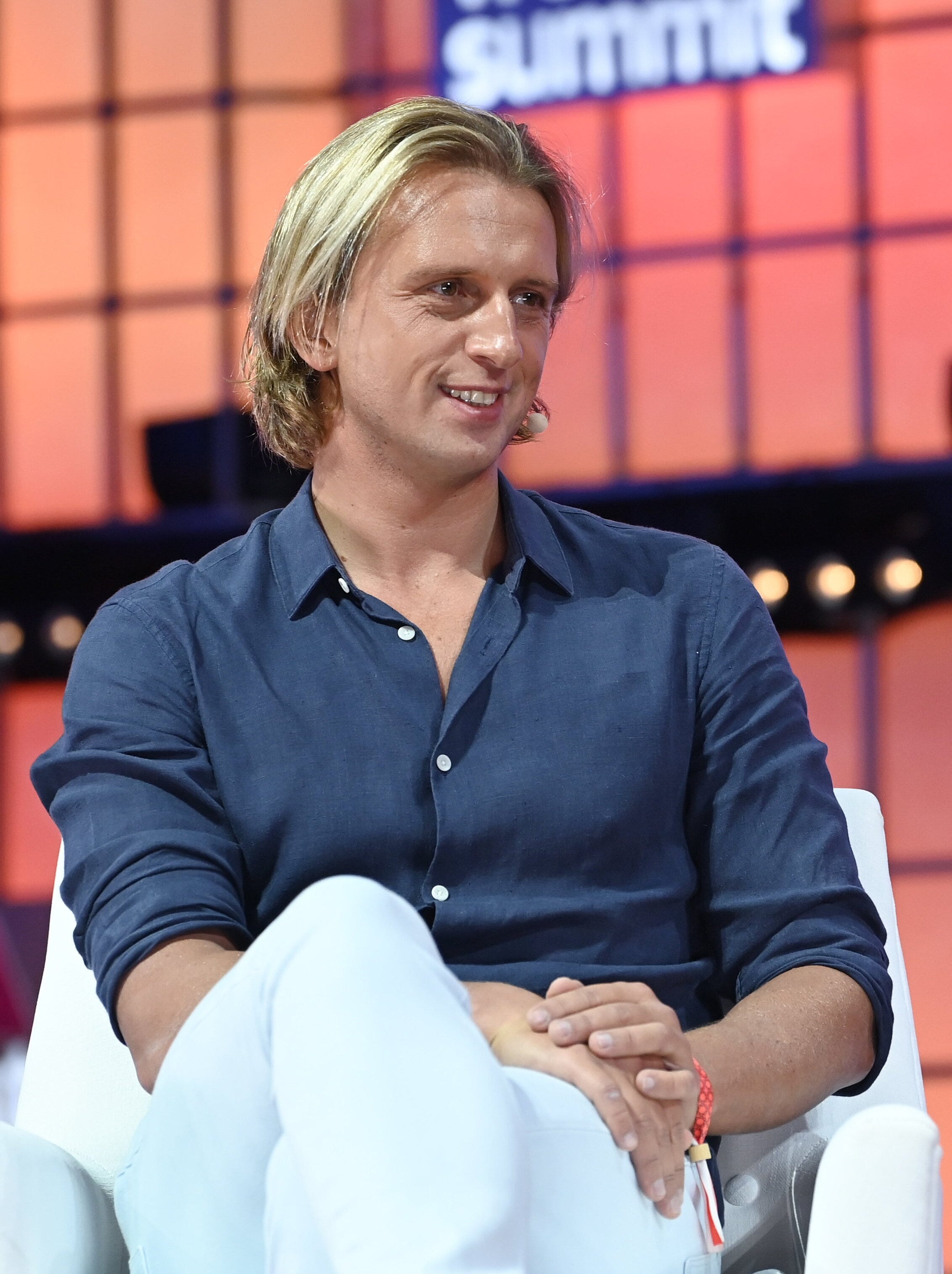
Last updated: November 6, 2026
Nik Storonsky is the co-founder and CEO of Revolut, the London fintech that a secondary share sale in early November 2026 valued at $115 billion — 53% above the $75 billion price tag it carried a year earlier. Investors including Glade Brook, Coatue, Durable Capital, T. Rowe Price and Baillie Gifford led the sale, which brought no new money into the company, TechCrunch reported. Revolut has more than 80 million retail customers across over 40 countries and has received conditional approval from the U.S. Office of the Comptroller of the Currency to establish a national bank, which it plans to launch in the first half of 2027, subject to final regulatory approval. Storonsky, 42, was born near Moscow, traded derivatives at Lehman Brothers and Credit Suisse, and started Revolut in 2015 with engineer Vlad Yatsenko after getting tired of foreign-exchange fees on his own trips.
Get profiles like this in your inbox — Subscribe to The Profile (free)
Quick facts
Name: Nikolay Nikolayevich Storonsky (goes by Nik)
Born: July 21, 1984, Dolgoprudny, near Moscow (age 42)
Citizenship: United Kingdom (renounced Russian citizenship in 2022)
Job: Co-founder and CEO of Revolut (since 2015)
Also: Founder of QuantumLight, an AI-guided venture firm (2022)
Education: Master’s in general and applied physics, Moscow Institute of Physics and Technology (2007); master’s in applied economics and finance, New Economic School (2007)
Earlier career: Equity derivatives trader at Lehman Brothers (from 2006) and Credit Suisse (until 2013)
Revolut scale: More than 80 million retail customers in 40+ countries; ~$6 billion revenue and 38% profit margins in 2025 (company figures via TechCrunch)
Valuation: $115 billion (secondary share sale, November 2026), up from $75 billion a year earlier
Family: Married; four children
Known for: Building Revolut from a multi-currency travel card into Europe’s most valuable private company
Who is Nik Storonsky?
Storonsky was born in 1984 in Dolgoprudny, a town just north of Moscow. His father, Nikolay Mironovich Storonsky, is a Ukrainian-born physicist and engineer who later ran Gazprom Promgaz. As a kid he boxed and swam; he later became a state swimming champion during his university years. He earned two master’s degrees in Moscow in 2007 — one in physics at the Moscow Institute of Physics and Technology, and one in economics and finance at the New Economic School.
He moved to London in 2006 and joined Lehman Brothers as an equity derivatives trader. He was at his desk when Lehman collapsed in 2008, then moved to Credit Suisse and stayed until 2013. The idea for Revolut came from the fees he paid exchanging money while traveling. He founded Revolut Ltd in December 2013 and put in about £300,000 of his own savings. Several months later he brought in Vlad Yatsenko, a software engineer formerly at Deutsche Bank, as CTO and co-founder. The app launched publicly in July 2015 as a prepaid multi-currency card at interbank rates.
Revolut grew from that travel product into a financial “super app”: payments, cards, foreign exchange, subscriptions, crypto and stock trading, insurance and business accounts. It secured European banking licenses via Lithuania, launched full banking in Mexico in January 2026, and in March 2026 said it had received a full U.K. banking licence with deposits protected by the Financial Services Compensation Scheme. In 2025 it posted about $6 billion in revenue at 38% profit margins, TechCrunch reported. Business banking, launched in 2017, now accounts for about 20% of gross profit and more than £950 million in annualized revenue.
Storonsky has said he wants Revolut to become the first truly global bank built on one technology stack. An IPO is unlikely before 2028; he has floated a dual listing with a preference for a primary listing in the U.S., and some reports have put a potential public valuation around $200 billion.
Career timeline
July 21, 1984: Born in Dolgoprudny, near Moscow.
2006: Moves to London; joins Lehman Brothers as an equity derivatives trader.
2007: Completes master’s degrees at MIPT and the New Economic School.
2008–2013: After Lehman’s collapse, trades at Credit Suisse until 2013.
December 2013: Incorporates Revolut Ltd; invests about £300,000 of his own money.
July 2015: Revolut launches publicly with Vlad Yatsenko as co-founder and CTO.
2018: European banking path via Lithuania; company becomes a unicorn.
2021: SoftBank Vision Fund 2 and Tiger Global help push valuation to about $33 billion.
March 2022: Condemns Russia’s invasion of Ukraine; Revolut pledges to match Red Cross donations for a limited time.
2022: Renounces Russian citizenship; founds QuantumLight.
July 2024: U.K. grants a banking licence with restrictions (mobilisation phase).
October 2025: Fundraising/secondary activity values Revolut at about $75 billion.
January 2026: Revolut launches full banking in Mexico.
March 2026: Announces a full U.K. banking licence.
Nov. 4, 2026: Secondary share sale values Revolut at $115 billion; U.S. national bank targeted for the first half of 2027.
Building Revolut
The travel card: The first product was a multi-currency card meant to cut FX fees. That became the wedge into a broader app.
Banking licences: E-money in the U.K., then Lithuania/Europe, then restricted and later fuller U.K. banking authorisation. Conditional OCC approval for a U.S. national bank, with a launch target in the first half of 2027.
Business banking: Processes more than £36 billion (~$48.6 billion) in transactions a month, including over £1 billion in the U.S., and holds more than £18 billion (~$24.3 billion) in customer deposits, the company told TechCrunch. It aims for 1 million business customers by 2027, from more than 800,000.
QuantumLight: His 2022 venture firm uses an AI platform, Aleph, to pick later-stage startups; by 2025 it had raised about $250 million.
The IPO clock: Storonsky has said a listing would help with trust and marketing, not just capital, and that it would come no earlier than 2028.
Want more stories like this? The Profile goes inside the decisions that shape careers like his. Subscribe free.
What he’s known for
Speed over hierarchy: He sets goals, gives teams autonomy and measures results — more tech company than traditional bank, El País wrote after interviewing him in Paris in October 2026.
Transactional, not loan-heavy: Revolut grew on payments, FX, cards and subscriptions. Storonsky has said loan-to-deposit ratios are around 4% and that he does not want to exceed roughly 10–20%, to stay “as safe as possible.”
An outsider’s path: Physics and trading desks, not branch banking. “At legacy banks, it’s almost impossible to get something new off the ground,” he told El País.
In the news
Nov. 4, 2026: TechCrunch reported a secondary share sale valuing Revolut at $115 billion, up 53% from about $75 billion a year earlier. No new capital entered the company. The same report said Revolut plans to launch a U.S. national bank in the first half of 2027, subject to final approval.
2026 banking expansion: Full banking in Mexico (January); full U.K. banking licence announced (March); banks also launched or licensed in markets including Australia and New Zealand, with further licences in France, Colombia and Argentina, per TechCrunch.
IPO talk: Storonsky has considered dual New York and London listings with a preference for a primary U.S. listing; timing depends on markets and is not expected before 2028.
Quotes
“At legacy banks, it’s almost impossible to get something new off the ground.” — El País interview, October 2026
“Our goal has always been to be as safe as possible, and that’s why we consciously went into transactional business rather than lending business.” — El País, October 2026
“I hope I can say we have won if we are larger than JPMorgan.” — El País, October 2026, on what “winning” would look like
Controversies / criticism
Culture and compliance: Former employees and media reports from 2018–2019 described a high-pressure workplace, high turnover and compliance concerns, including a 2016 whistleblower complaint to the U.K. Financial Conduct Authority about anti-money-laundering and sanctions controls. Storonsky later said the company had made mistakes and improved its culture.
UAE residency filing: In late 2025 the Financial Times reported that a Companies House filing listed Storonsky as a UAE resident while Revolut awaited a full U.K. banking licence, raising regulator concerns; the filing was later amended back to U.K. residency and described as an administrative error.
Russian-linked accounts: In late 2025 Revolut faced criticism for freezing accounts of some Russian expatriates in Europe under EU sanctions rules. Storonsky has said navigating global banking rules with a Russian passport was a reason he renounced that citizenship in 2022.
Net worth & money
Forbes’s 2026 billionaires list estimated Storonsky’s fortune at about $18.8 billion, reflecting an earlier Revolut valuation. Bloomberg’s Billionaires Index has been reported near $29.7 billion after the jump toward a $115 billion company price. As of December 2025 he held about a 29% stake in Revolut following incentive-structure changes, The Bell and the Financial Times reported; that stake alone would be worth roughly $33 billion at the November 2026 secondary price. Exact personal wealth moves with private-market marks and is not disclosed by the company.
FAQ
Who is Nik Storonsky?
He is the co-founder and CEO of Revolut, the British fintech valued at $115 billion in a November 2026 secondary share sale.
How old is Nik Storonsky?
He was born on July 21, 1984, so he is 42.
When was Revolut founded?
Storonsky incorporated Revolut Ltd in December 2013; the app launched publicly in July 2015 with co-founder Vlad Yatsenko.
What is Revolut worth?
A secondary share sale reported on Nov. 4, 2026, valued it at $115 billion, up 53% from about $75 billion a year earlier.
Is Revolut launching a U.S. bank?
It has conditional OCC approval to establish a national bank and plans to launch in the first half of 2027, subject to final regulatory approval, TechCrunch reported.
Is Nik Storonsky Russian or British?
He was born in Russia and is a British citizen. He renounced his Russian citizenship in 2022 after condemning the invasion of Ukraine.
Further reading
Revolut’s valuation jumps 53% to $115B in new share sale as it prepares to launch US bank — TechCrunch
Nik Storonsky interview — El País
Who is Revolut’s Nik Storonsky, the CEO taking on the banks? — Reuters
Nik Storonsky — Wikipedia (background; cross-check)
The Profile sends deeply reported profiles of influential people every week. Subscribe free →