

Holy freaking cow.
I saw the new Elizabeth Holmes documentary, You Can See Everything, last night, and I genuinely can’t type fast enough to express how mind-bending it was.
I’ve seen a lot of chatter online about whether Elizabeth Holmes is a liar, whether she deserves to be in prison for her failed startup Theranos, and whether the documentary is too sympathetic to her.
But that’s not even remotely close to what I took away from it. As we walked out, my husband asked me, “So what did you think?” And I just responded with, “Forget Elizabeth Holmes. That was a masterpiece in storytelling.”
I walked in expecting that the filmmakers were going to tell us a story about deception. What I did not expect is that they were deceiving us — the viewers — in real time.
An entire theater full of grown adults was falling for it. At one point, people were shouting so loudly at the screen that I couldn’t hear the dialogue. I heard a woman yell, “Criminal!” — and it wasn’t directed at Elizabeth Holmes. I’ve never experienced anything like that in a movie theater. It was emotion, and it was visceral.
What makes the documentary so brilliant is that it forces you to confront how much of what you believe about another person comes how their story has been told to you. And we are so so susceptible to this that it’s scary.
Think about Elizabeth Holmes. How much of your opinion of her comes from the facts of her criminal case & how much comes from the images and/or videos and/or TV dramas you’ve seen over the years? I remember one Halloween when the Theranos scandal was at its peak, it seemed like everyone was dressed in a black turtleneck carrying tiny vials of fake blood. Holmes was everywhere.
But the thing that often gets lost in the retelling of her story is that Holmes was actually acquitted of all four charges related to defrauding patients. She’s in prison because a jury found that she knowingly misled investors who poured more than $700 million into the startup. That’s a significant distinction, but as a society, we don’t love nuance. Just tell us — is she good or is she bad? Is she a liar or is she not?
I recently wrote about a fascinating experiment Canon conducted in 2015. Six photographers were asked to photograph the same man in the same location. The twist was that each photographer was given a different description of him: a millionaire, a convict, a fisherman, an alcoholic, a psychic, and a lifesaver.
The resulting portraits were wildly different.
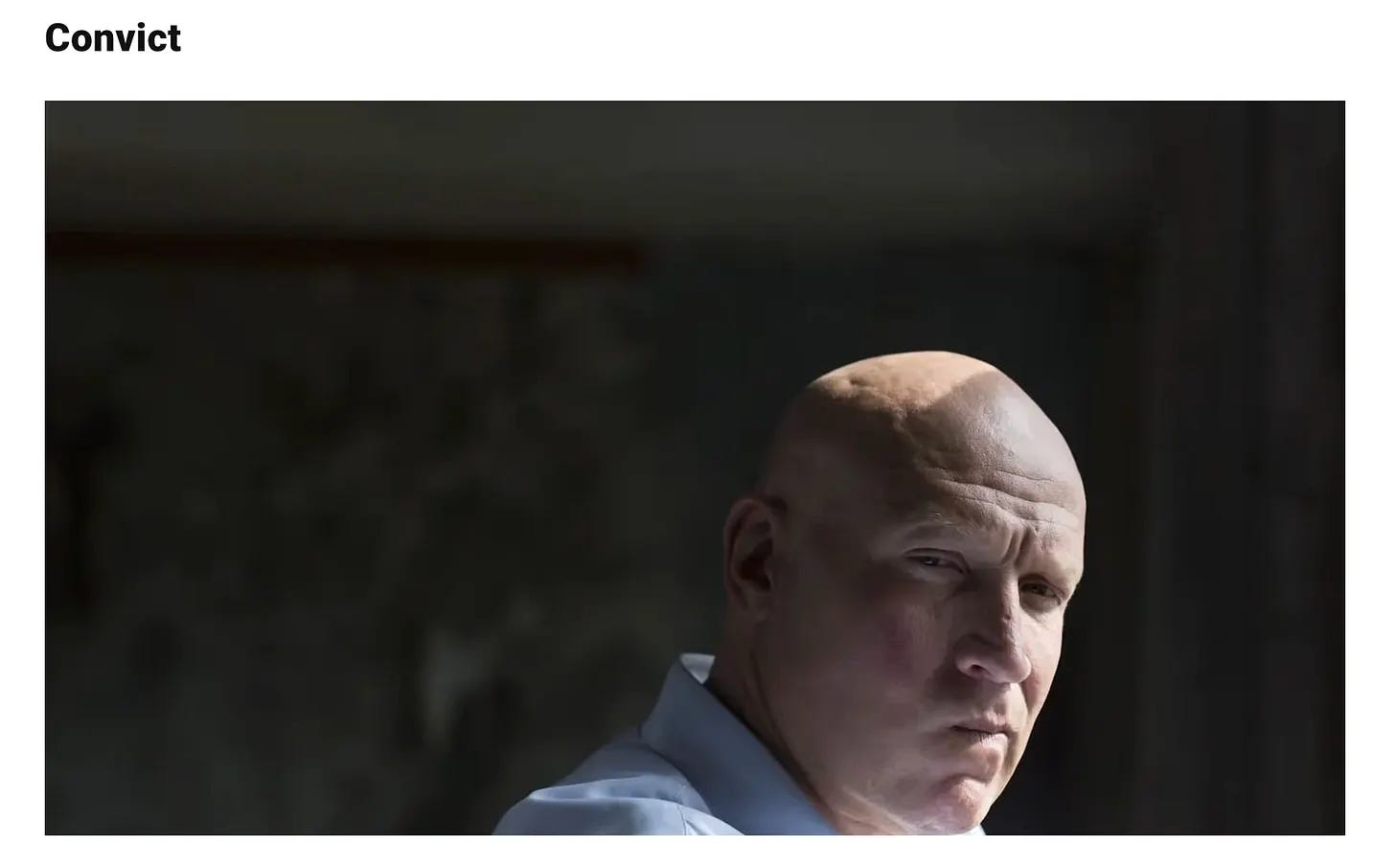
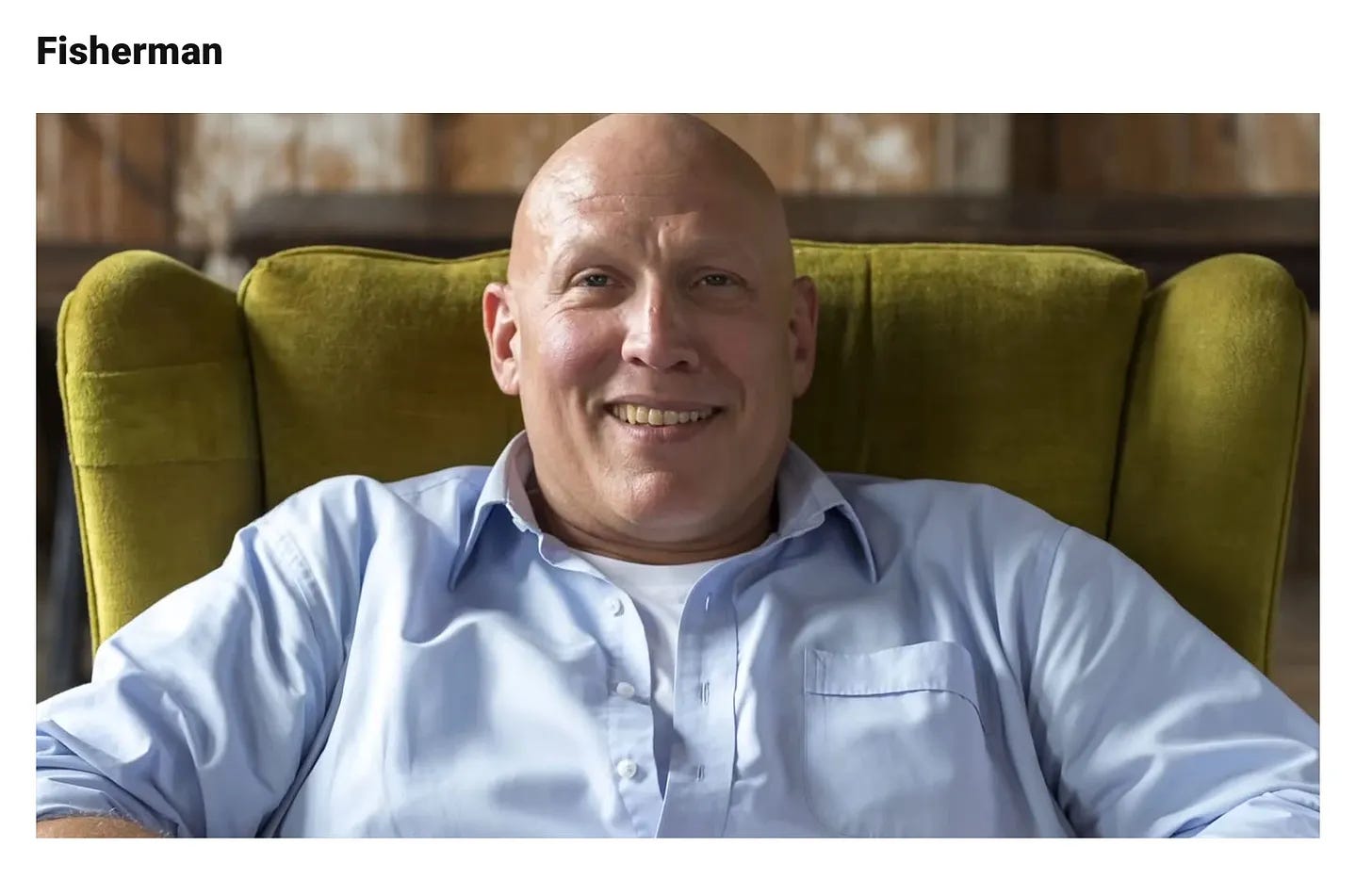
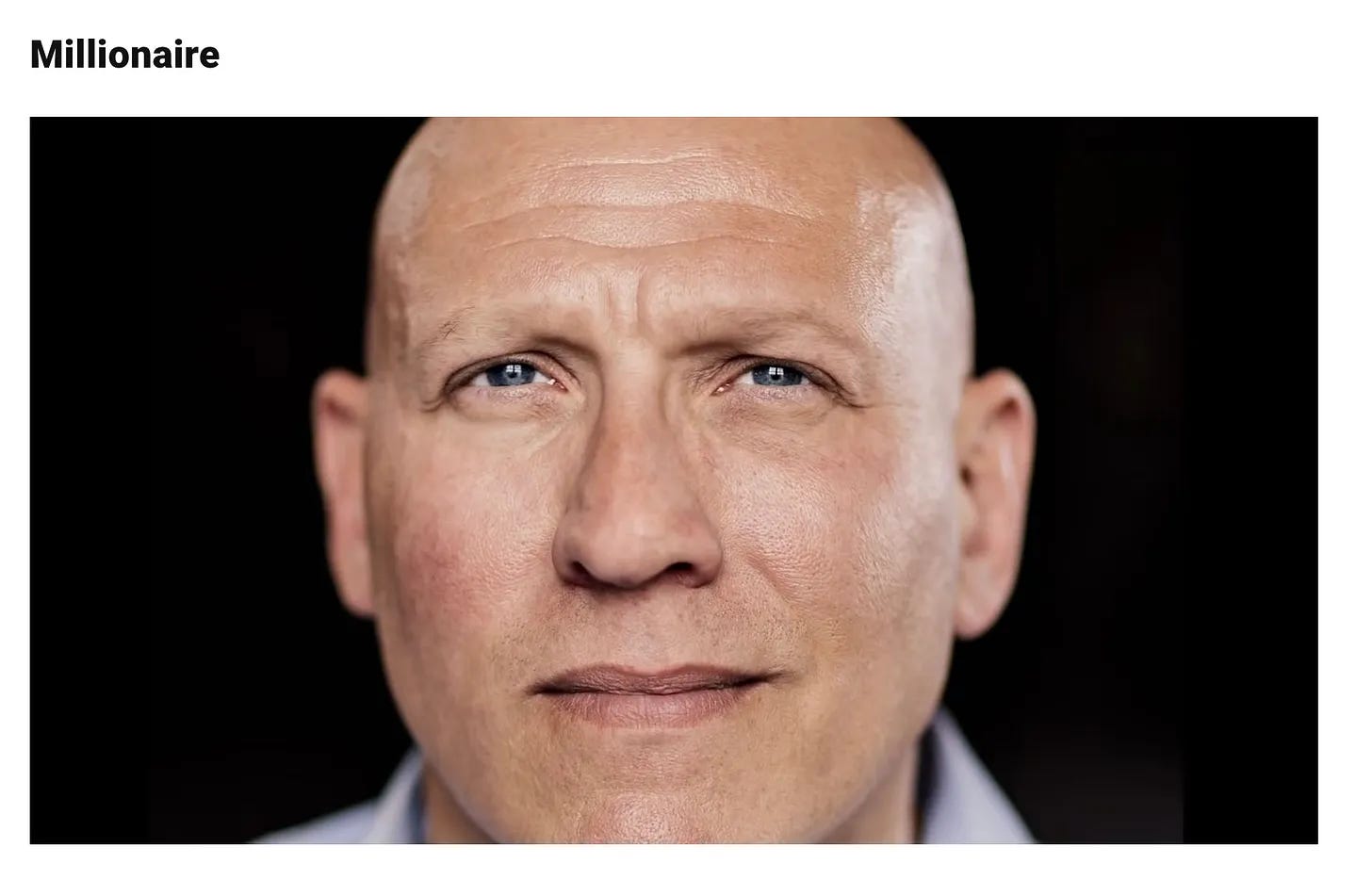
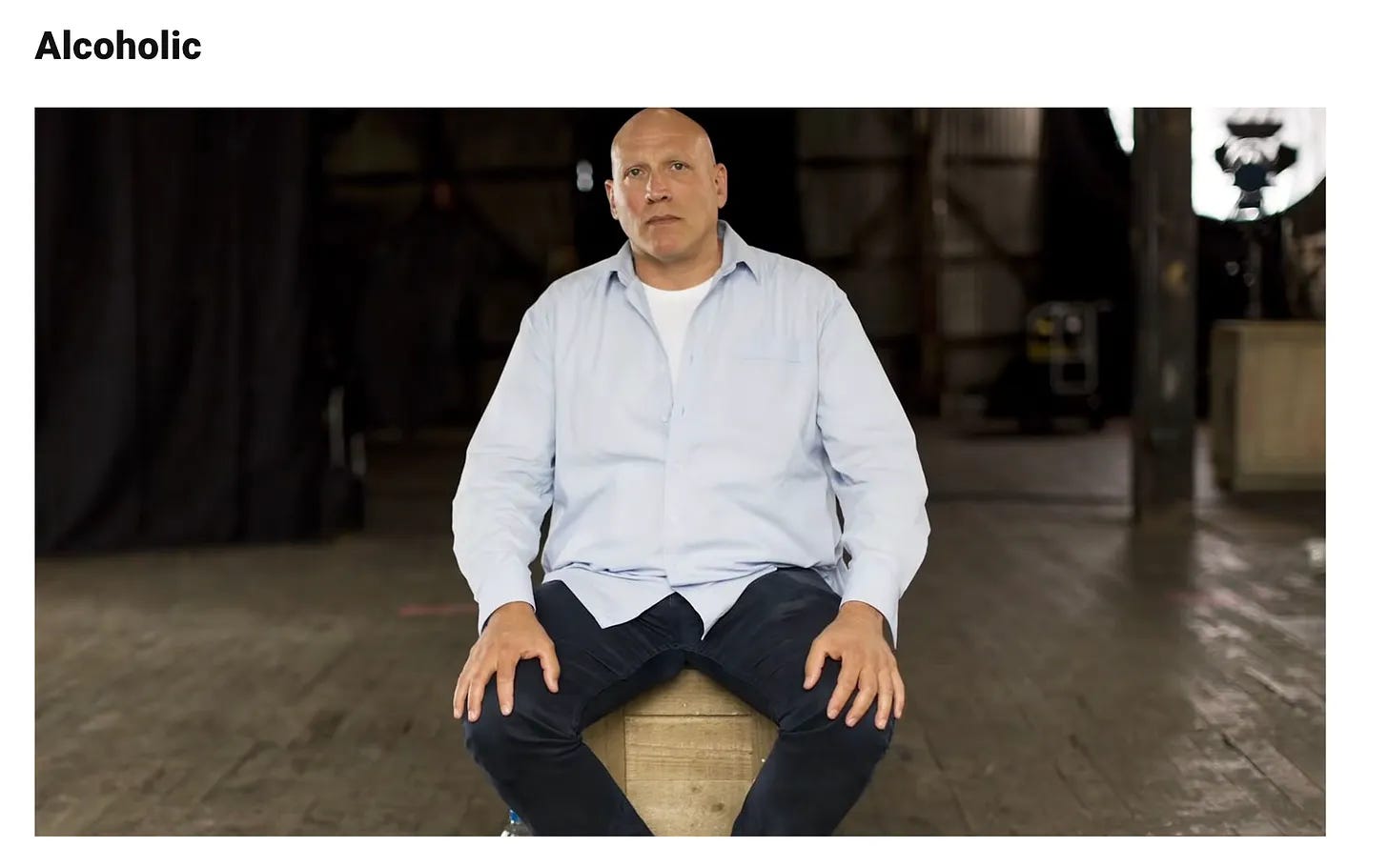
A Canon rep said, “A photograph is shaped more by the person behind the camera than by what’s in front of it.”
Now imagine that principle applied to an entire three-hour documentary.
Over the course of the film, directors Lance Oppenheim and Nathan Fielder managed to make a theater full of people with fully developed pre-frontal cortexes repeatedly reconsider what they believed about the people on screen. They did it through camera angles, close-ups, editing, and the order in which information was revealed.
The framing of Elizabeth and those around her changed little by little until it became obvious, and as soon as our brains detected a narrative shift, our feelings about it followed. It was like watching a magic show … or one continuous reality TV show in which someone gets the villain edit, the victim edit, the manipulator edit, and all of us just falling for it again and again.
We like to believe that we form our opinions by gathering evidence, weighing facts, and arriving at reasonable conclusions. Be for real. No we do not. Here’s how it actually goes: We form an emotional impression first, then we build a belief around it, and then we go looking for facts that support it. This is my theory as to why we’re so divided in this country. Beliefs built on emotion are nearly impossible to reason with.
The psychology behind the film’s manipulation should be studied. First, a close-up shot of an unblinking Elizabeth Holmes: She’s sinister. Then, a wider shot of her bouncing her baby: Wait a second, she’s a mom, she’s human! Then, her husband’s painstakingly long pause: Wait, is he the puppeteer? Then, a smile! “No, no, that can’t be genuine.”
And then there’s Fielder himself, who moved in with the couple for a whole month before Holmes headed to prison. How reliable of a narrator is he? Does he care a bit too much for Elizabeth that he’s willing to lie to the viewer? How much can we trust his perception of events?
I’m telling you, it’'ll break your brain.
You Can See Everything does a good job explaining the phenomenon of psychological manipulation, but it also makes you participate in it. It evokes emotion, and all of the greatest pieces of art evoke emotion.
You sit there believing you’re watching a documentary about a woman who deceived the world, only to discover that you’re also watching a demonstration of how easy it is to deceive you.
(This was really hard to write without giving away any spoilers, but watch the film, and let me know what you think!)


Spot on and I have so many thoughts swirling. Were they complicit in the narrative direction that the 'documentary' took? At one point I had to readjust my brain and consciously consider that maybe I was watching a feature film about a documentary about a feature film. My head is spinning. It was so clever.